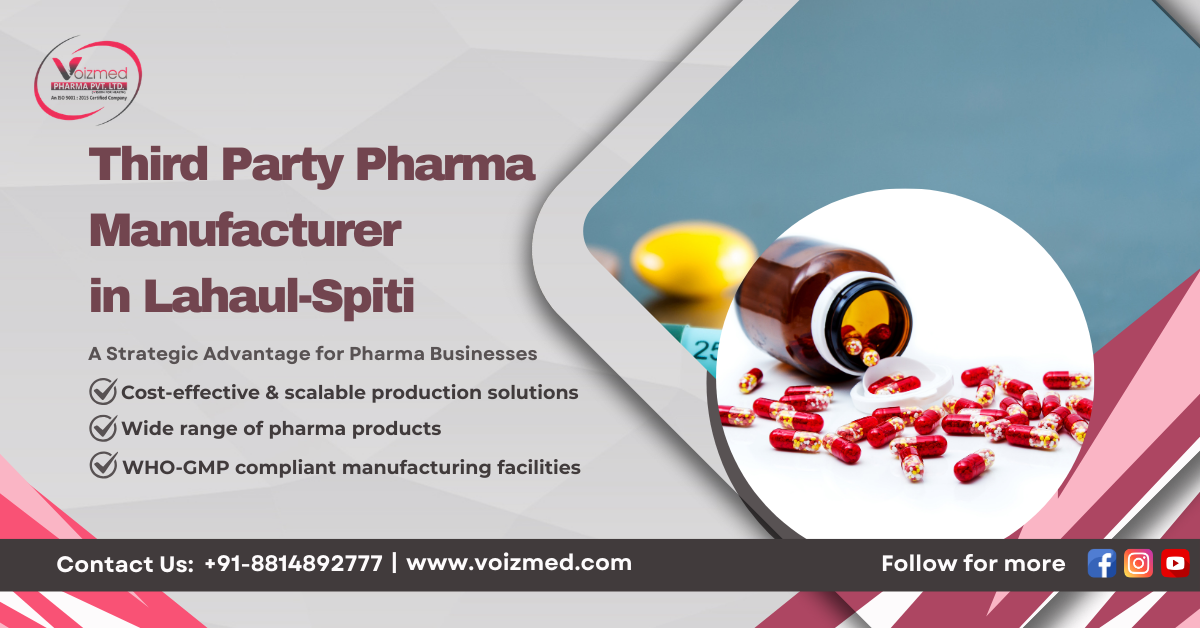
The pharmaceutical industry in India is one of the fastest-growing sectors globally, with a dynamic supply chain and strong manufacturing capabilities that serve both domestic and international markets. A key trend propelling this growth is third party pharma manufacturer in Lahaul-Spiti — a business model that enables pharma brands to outsource production to specialised contract manufacturers.
While traditionally concentrated in industrial hubs like Himachal Pradesh’s Baddi region, the evolving market has seen demand surge even in remote districts such as Lahaul-Spiti.
This blog explores why choosing a third party pharma manufacturer in Lahaul-Spiti is a smart move for pharmaceutical entrepreneurs and businesses looking to scale quickly and cost-effectively.
Read this article to learn about:
ToggleWhat is Third-Party Pharma Manufacturing?
Third-party pharma manufacturing refers to a contractual agreement where a pharmaceutical company outsources its product production to a specialised manufacturing partner. The third party takes care of production, quality testing, packaging, and often logistics — while the brand retains ownership of the final product under its own label.
In essence, this model enables businesses to focus on marketing, distribution, regulatory compliance, and customer acquisition, while leaving complex manufacturing operations to experts who are equipped with the necessary infrastructure, technology, and regulatory knowledge.
Why Lahaul-Spiti for Pharma Manufacturing?
Although Lahaul-Spiti is known for its serene Himalayan landscapes, it has strategic advantages that make it appealing for pharma business expansion:
1. Strategic Access to Himachal Pradesh’s Pharma Ecosystem
Lahaul-Spiti borders industrial districts like Baddi, Solan, and Kala Amb — prominent hubs for pharmaceutical manufacturing in Himachal Pradesh. These regions house numerous WHO-GMP-certified facilities capable of providing third-party pharma manufacturing services to brands operating in or targeting Northern India.
2. Rising Demand and Regional Opportunities
The demand for quality medicines has grown across Himachal Pradesh and neighbouring states. Businesses in Lahaul-Spiti that partner with reputable third-party manufacturers can effectively serve this expanding market without heavy investments in manufacturing facilities.
3. Lower Operational Costs
Being a less industrialised region, Lahaul-Spiti offers opportunities to reduce overheads — particularly if brands establish administrative or sales operations locally while outsourcing manufacturing to nearby certified facilities.
Top Benefits of Third-Party Pharma Manufacturing
Partnering with a third-party manufacturer brings a multitude of advantages, especially for new or expanding pharma brands:
1. Cost Efficiency
Setting up an in-house manufacturing plant demands significant investment in land, machinery, workforce, and regulatory compliance. Through the best third-party pharma manufacturing in India, companies can bypass these high capital costs and allocate resources toward marketing and distribution instead.
2. Access to Advanced Technology and Expertise
Third-party manufacturers operate with the latest equipment, quality control systems, and experienced personnel. This ensures products are manufactured with consistency, safety, and efficacy.
3. Flexibility and Scalability
Whether a company needs small production batches for niche products or mass production for high-demand medicines, third-party partners can adjust output volumes accordingly, offering agility that internal facilities might struggle to achieve.
4. Faster Time to Market
Brand owners can significantly reduce product launch timelines because contract manufacturers already possess the required infrastructure, approvals, and ready workforce to begin production swiftly.
5. Regulatory Compliance and Quality Assurance
Reputable third-party manufacturers adhere to stringent guidelines such as WHO-GMP, DCGI, and ISO standards, ensuring products meet national and international compliance benchmarks.
6. Focus on Core Business Activities
By contracting manufacturing tasks, pharma companies can direct attention toward product branding, sales strategy, distributor relations, and customer support — areas critical for business expansion.
Typical Products Covered in Third-Party Agreements
Contract manufacturers handle diverse pharmaceutical formulations:
- Tablets and Capsules
- Syrups and Suspensions
- Injectables
- Ointments, Creams, and Gels
- Nutraceuticals and Dietary Supplements
Some manufacturers also support specialised formulations upon request.
Step-by-Step Process of Third-Party Pharma Manufacturing
Understanding the process helps businesses align expectations and minimise delays:
1. Product Discussion and Finalisation
The client shares product formulation, packaging needs, and order volume with the manufacturer. Sampling and quality checks follow before full-scale production begins.
2. Documentation and Agreement
Legal, compliance, and contractual documents are exchanged. The mutual agreement outlines pricing, timelines, quality benchmarks, and delivery terms.
3. Manufacturing and Quality Checks
Batch-wise production begins, with stringent in-process and final quality checks conducted under GMP standards.
4. Packaging and Dispatch
Products are packaged as per specifications and dispatched to the client or distributor network. Timely tracking and coordination support completes the cycle.
How to Choose the Best Third-Party Pharma Manufacturer
Selecting the right partner is crucial. Consider the following factors:
1. Certifications and Compliance
Ensure the manufacturer maintains valid WHO-GMP, ISO, and DCGI certifications for safety and quality compliance.
2. Manufacturing Capacity
Assess their production capacity to accommodate your present and future needs.
3. Quality Control Infrastructure
Inquire about on-site labs, testing protocols, and batch traceability to guarantee consistent quality.
4. Product Portfolio and Expertise
A diversified product range indicates a mature facility capable of handling different formulations.
5. Communication and Reliability
Responsive communication ensures clarity during manufacturing, quality inspections, and supply planning.
Frequently Asked Questions (FAQs)
Q1: What is a third-party pharma manufacturer?
A third-party pharma manufacturer in India is a specialised production partner that manufactures pharmaceutical products on behalf of a brand, which then sells them under its own label.
Q2: Why should a pharma company outsource production?
Outsourcing reduces manufacturing costs, speeds up time to market, provides access to advanced production technology, and allows the brand to focus on sales and marketing.
Q3: Is third-party pharma manufacturing suitable for startups?
Absolutely — it enables startups to enter the pharma market without heavy capital investment in infrastructure.
Q4: What quality standards should I look for in a manufacturer?
Always verify WHO-GMP, ISO, and local regulatory approvals to ensure high quality and compliance.
Q5: Can I customise my product formulation?
Yes. Trusted manufacturers often assist with formulation optimisation and packaging customisation based on your brand requirements.
Conclusion
The model of third party pharma manufacturing in India has revolutionised how pharmaceutical businesses operate in India. For entrepreneurs and companies in Lahaul-Spiti, this approach offers a unique opportunity to tap into advanced manufacturing infrastructure without the burden of in-house production. By aligning with credible third-party manufacturers, brands can accelerate growth, ensure regulatory compliance, reduce costs, and deliver high-quality medicines to consumers.
If you’re planning to launch or scale your pharmaceutical products, partnering with a reliable third party pharma manufacturer — even while operating from regions like Lahaul-Spiti — can be your gateway to market success.
